Draw review and payment controls: Handoff and recordkeeping
Draw review and payment controls: Handoff and recordkeeping. Draw review protects the owner by connecting payment requests to observed progress, approved…
Why this matters
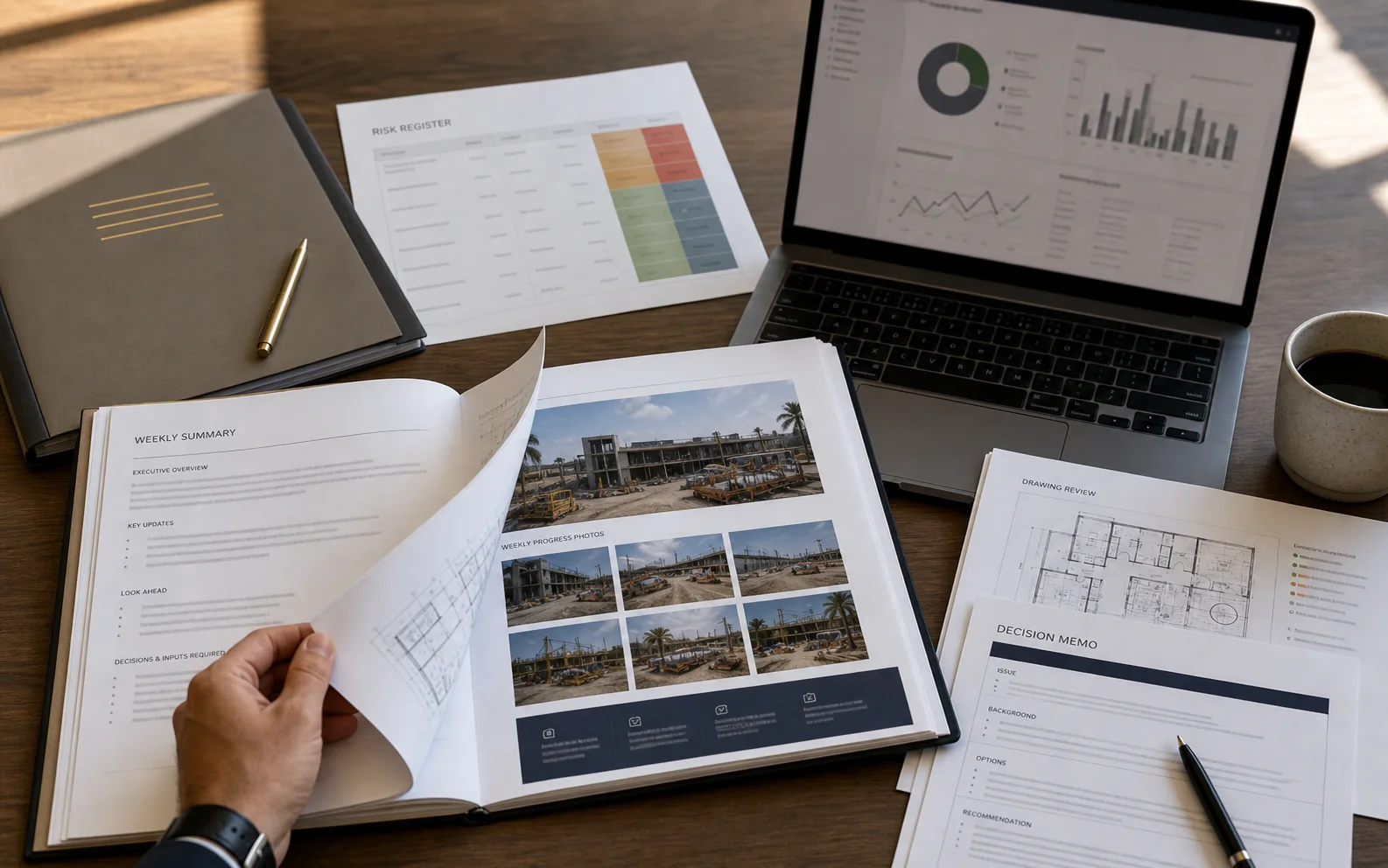
Draw review protects the owner by connecting payment requests to observed progress, approved changes, stored materials, and required support—not by delaying legitimate payment. A strong handoff lets the next person understand what was decided, what remains open, and which source document controls the work.
The useful question is not whether draw review and payment controls sounds attractive in the abstract. It is whether the people making the decision can see the assumptions, the evidence, the limits, and the next action clearly enough to act responsibly. A draw can be numerically correct while still asking the owner to fund work that is incomplete or unsupported.
A practical framework
For draw review and payment controls, begin with a compact handoff packet with source links, decision history, open items, and acceptance evidence. The sequence below keeps the decision teachable and gives the next person enough context to continue the work.
- compare the application with the schedule of values
- verify completed work and stored material documentation
- reconcile approved changes and retainage
- record exceptions and release conditions
Questions to answer
- What would a new teammate need to know on the first day?
- Which version of the drawing, quote, policy, or approval is controlling?
- How will the team prove that the handoff was accepted?
Common failure modes
- Transferring files without transferring the reasoning behind the decision.
- Keeping critical context in one person’s inbox or memory.
- Closing a task because a file exists rather than because the result was reviewed.
What a useful record contains
A useful record for draw review and payment controls should make the decision auditable without pretending that uncertainty has disappeared. Start with the following evidence and label what is still provisional.
- compare the application with the schedule of values; record its source, date, and limitation.
- verify completed work and stored material documentation; record its source, date, and limitation.
- reconcile approved changes and retainage; record its source, date, and limitation.
A sensible next step
Use a repeatable draw checklist and retain a concise exception log. The goal is not to create paperwork for its own sake; it is to make the next decision safer, clearer, and easier to review.
This guide is educational and does not replace project-specific legal, financial, technical, medical, employment, or professional advice.
Related resources
Further reading
- Florida DBPR — license and regulated-profession lookup
- Florida Building Commission — Florida code resources
Related River Business resources
- River Business Corp — development platform and project context
- Construa — construction execution partner context
- FLPro Staffing — field workforce support
- Property for Equity — property and capitalization education

Every engagement starts with a project review.
That is what the project review is for. Share the scope and we will tell you whether we are the right firm for it.
Request a project review