Project closeout and lessons learned: A practical checklist
Project closeout and lessons learned: A practical checklist. Closeout is not only the delivery of files; it is the point at which the owner can understand…
Why this matters
Closeout is not only the delivery of files; it is the point at which the owner can understand what was built, what remains open, and what the team should do differently next time. A checklist is useful when it records decisions and evidence, not when it becomes a box-ticking exercise.
The useful question is not whether project closeout and lessons learned sounds attractive in the abstract. It is whether the people making the decision can see the assumptions, the evidence, the limits, and the next action clearly enough to act responsibly. A team that closes only the paperwork loses the practical knowledge that could prevent the next avoidable mistake.
A practical framework
For project closeout and lessons learned, begin with a one-page decision record with open questions, named owners, and a next review date. The sequence below keeps the decision teachable and gives the next person enough context to continue the work.
- confirm final scope, approvals, and acceptance
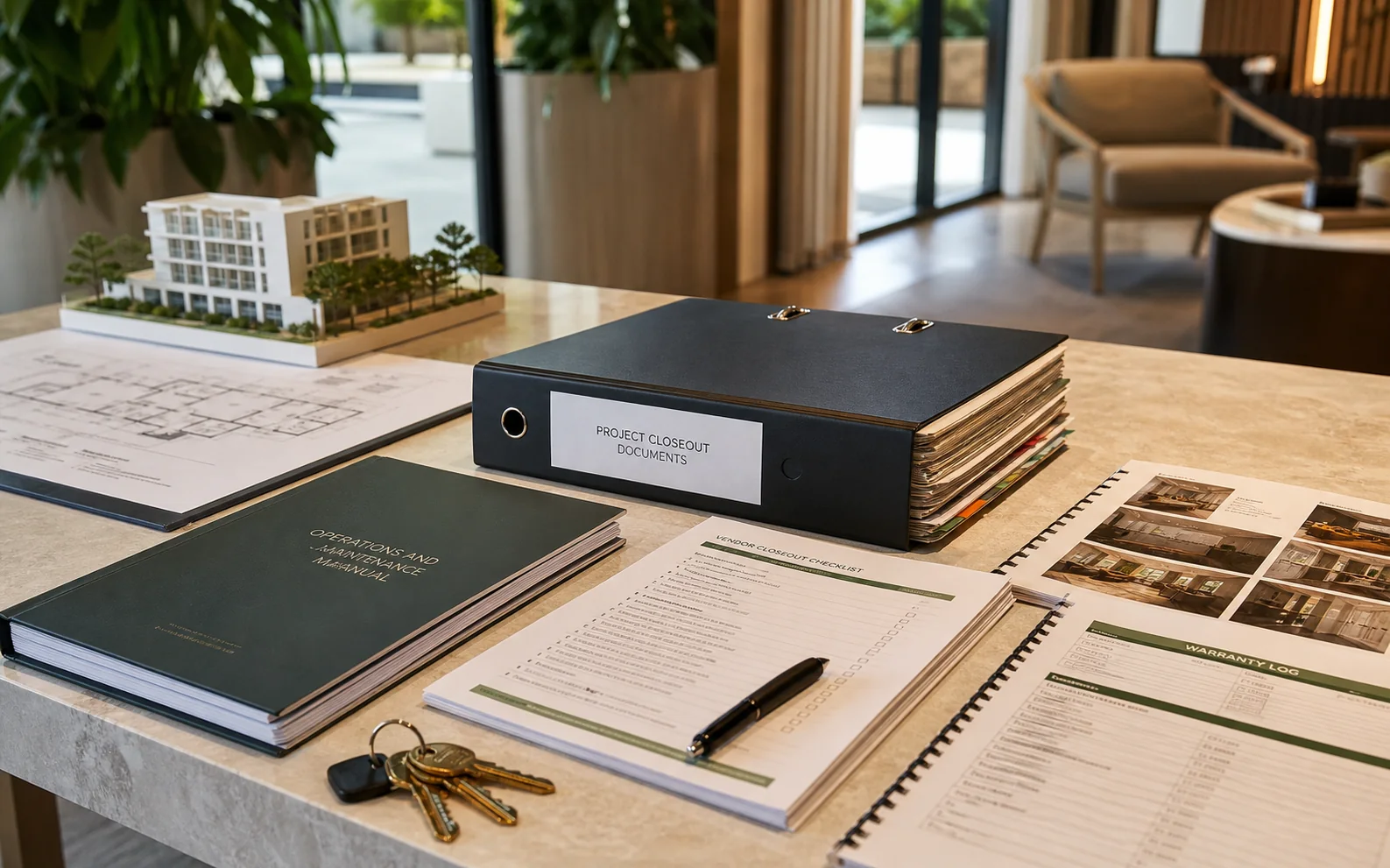
- organize warranties, manuals, and unresolved items
- compare planned and actual cost and schedule
- record lessons that can improve the next project
Questions to answer
- What must be true before this decision is safe to advance?
- Which fact should be verified by a document, site observation, or qualified professional?
- Who owns the next action, and when will the record be updated?
Common failure modes
- Starting with a preferred answer and collecting only confirming facts.
- Leaving the owner of a task or the date of the next review unstated.
- Treating a preliminary screen as a final approval.
What a useful record contains
A useful record for project closeout and lessons learned should make the decision auditable without pretending that uncertainty has disappeared. Start with the following evidence and label what is still provisional.
- confirm final scope, approvals, and acceptance; record its source, date, and limitation.
- organize warranties, manuals, and unresolved items; record its source, date, and limitation.
- compare planned and actual cost and schedule; record its source, date, and limitation.
A sensible next step
Hold a short closeout review while the decisions and field conditions are still visible. The goal is not to create paperwork for its own sake; it is to make the next decision safer, clearer, and easier to review.
This guide is educational and does not replace project-specific legal, financial, technical, medical, employment, or professional advice.
Related resources
Further reading
- Florida DBPR — license and regulated-profession lookup
- Florida Building Commission — Florida code resources
Related River Business resources
- River Business Corp — development platform and project context
- Construa — construction execution partner context
- FLPro Staffing — field workforce support
- Property for Equity — property and capitalization education

Every engagement starts with a project review.
That is what the project review is for. Share the scope and we will tell you whether we are the right firm for it.
Request a project review